
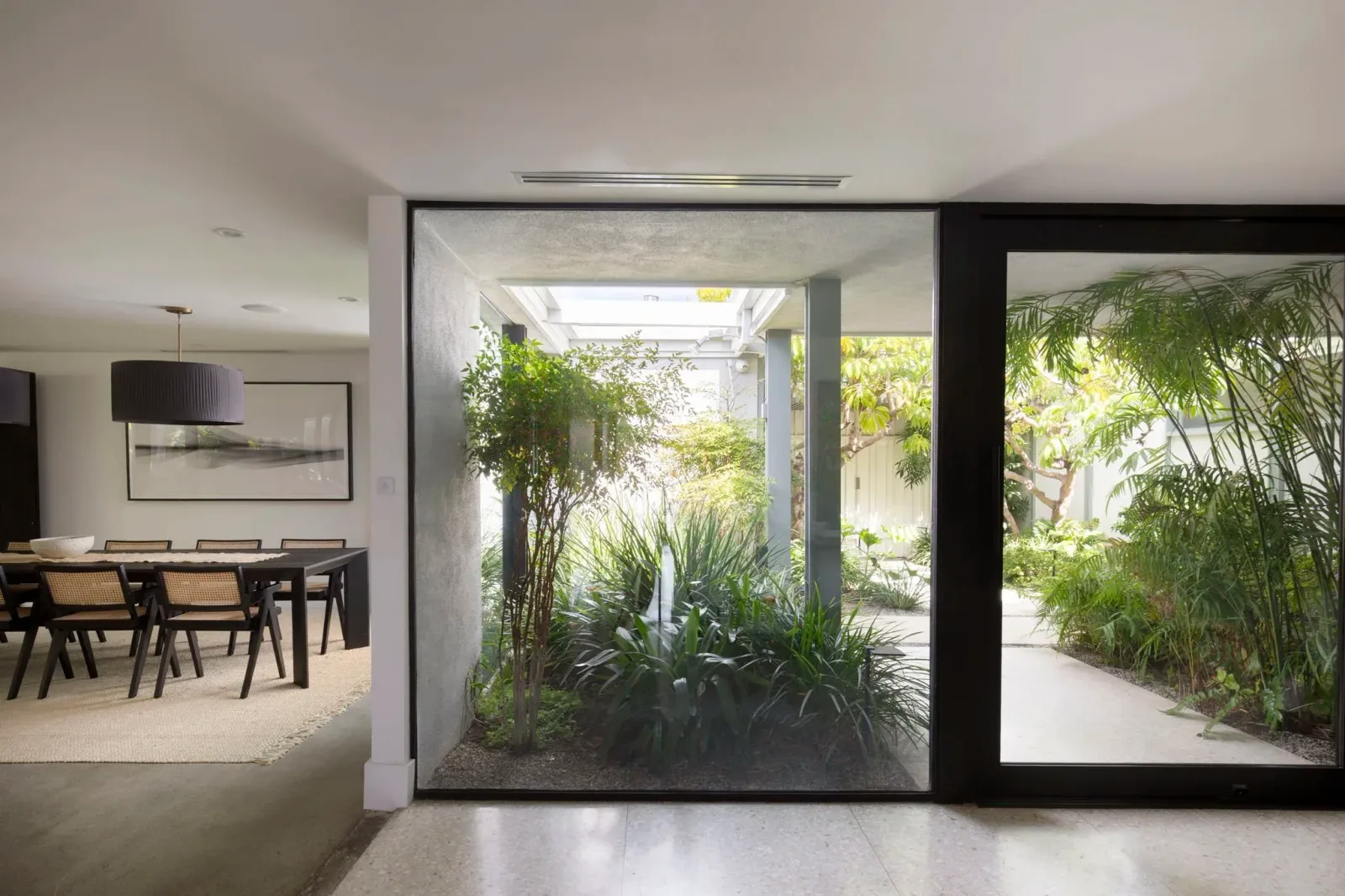
Ladera Heights is an unincorporated community in Los Angeles County, sitting southwest of Baldwin Hills and north of Inglewood. It is known for its large lots, mid-century modern and ranch-style homes, and strong community identity built around the Ladera Heights Civic Association. As of 2026, the median sale price in Ladera Heights reached approximately $1.6 million to $2.1 million depending on the data source and time period, with homes spending an average of 64 to 83 days on the market. That pace gives buyers meaningful time to evaluate and negotiate, which is a real advantage in the Los Angeles metro area. This guide covers what buyers need to know before searching for homes for sale in Ladera Heights, from pricing and property types to schools, commute, and long-term value.
Ahead of the Curve Homes serves buyers across the Westside Los Angeles corridor, including Ladera Heights, with local knowledge that goes beyond standard listing data.
Ladera Heights Real Estate Market Overview
- The average home price in Ladera Heights sits between $1.6 million and $2.1 million in 2026, with the median sale price for single-family homes reported at $1,641,518 by Redfin in mid-2026.
- The median listing price for condominiums and townhomes in Ladera Heights stands at approximately $676,000 as of mid-2026, offering a more accessible entry point into the community.
- Los Angeles County's effective property tax rate is approximately 1.25% of assessed value, meaning a $1.6 million home generates roughly $20,000 in annual property taxes before any special assessments.
- The cost of living in Los Angeles is 52% higher than the national average, and Ladera Heights sits at the upper end of that range, reflecting its large lot sizes, architectural quality, and desirable Westside-adjacent location.
- HOA fees in Ladera Heights are uncommon for single-family homes. Condo and townhome properties in the area typically carry fees ranging from $300 to $600 per month depending on the building and amenities.
- The best pockets for buyers in the area include the streets closest to Ladera Park in "Old Ladera" and, if seeking a mid-century home, the best place is "New Ladera," west of La Cienega Boulevard both north and south of Slauson Avenue. Some of the parcels north of Slauson have west-facing views towards the Pacific Ocean and south-facing views towards the Palos Verdes Peninsula.
What Makes Ladera Heights Appealing to Home Buyers
Ladera Heights has a distinct identity within the Los Angeles County landscape. It is an unincorporated community, which means it relies on the Los Angeles County Board of Supervisors for governance rather than a city council. That structure has helped preserve the community's residential character and kept commercial development modest relative to surrounding areas. The streets are wide, the lots are large by LA standards, and the housing stock reflects the post-World War II California ideal of spacious ranch and mid-century living.
The Ladera Heights Civic Association is one of the most active neighborhood associations in the area and organizes regular community events including the annual Ladera Park Community Picnic. That kind of organized resident engagement creates a level of neighborhood cohesion that buyers consistently value once they're living here. Ladera Heights became one of the most prominent African American communities in Los Angeles in the second half of the twentieth century, with a long history of professional and business leadership, and that legacy still shapes the neighborhood's identity and pride. That history is reflected in the housing stock itself: a high proportion of original, well-preserved mid-century and ranch-style homes on generous lots, many maintained by long-tenured owners.
The neighborhood's proximity to Culver City, the Westside tech and media corridor, and LAX makes it genuinely practical for a range of buyers. It is close enough to everything while maintaining a residential calm that more urban neighborhoods in LA simply can't replicate.
How Much Do Homes for Sale in Ladera Heights Cost
The pricing picture in Ladera Heights reflects its premium residential character. In mid-2026, Redfin reported a median sale price of $1,641,518 for single-family homes, while Realtor.com reported a median listing price of $2 million for the same period. That range reflects the variety of inventory, from well-maintained originals to fully renovated larger properties on premium lots.
The median price per square foot in Ladera Heights runs approximately $638 based on recent data, though that figure varies meaningfully by property condition and renovation level. The sale-to-list ratio sits at approximately 98%, which tells buyers that most transactions are closing very close to asking price when sellers price accurately. Homes spending 64 to 83 days on the market give buyers more time to evaluate than in the peak years of 2021 and 2022, but prepared buyers still need to act decisively on well-priced properties.
At the condo and townhome level, the median listing price sits at approximately $676,000 as of mid-2026. The condo segment offers an attractive entry point for buyers who want Ladera Heights access without the single-family price commitment.
What Types of Homes Can You Find in the Area
Ladera Heights was developed primarily from the late 1940s through the early 1960s, and the housing stock reflects that era clearly. Ranch-style single-family homes are the most common property type, and many feature the original California indoor-outdoor design principles that were popular during that period: wide rear patios, attached garages, and open floor plans that flow into the yard.
Mid-century modern homes are also well-represented, and this architectural style has driven significant buyer interest and price premiums in the neighborhood over the past decade. Buyers who appreciate original architectural detail, clean lines, and period design find that Ladera Heights offers one of Los Angeles' largest collections of intact Mid-Century Ranch homes.
Condo and townhome options exist primarily in smaller complexes, typically two to four stories, and are clustered near the Slauson Avenue corridor and adjacent streets. These properties attract buyers who want the Ladera Heights community and location without the maintenance demands of a large single-family home on a substantial lot.
Which Parts of Ladera Heights Are Best for Home Buyers
If you're searching for a classic mid-century home, "New Ladera" is the best option. "New Ladera" is located west of La Cienega Boulevard, on both the northern and southern sides of Slauson Avenue. The collection of sprawling, largely one-story mid-century homes built in approximately the mid-1950s in this area is second to none. Many of them were designed by prominent architects including Robert L. Earl, Charles W. Wong, N.D. Ferzacca, Gregory Ain, and Paul Bennet. Little new development has taken place in this area, so the mid-century homes are largely intact and untouched, a boon for architecture buffs. In addition to cohesive architecture, this area boasts large lots, typically around 8,000 square feet or above, and some of the parcels have views facing the Pacific Ocean or south towards Palos Verdes.
Buyers who are seeking a tranquil neighborhood at a slightly lower price point are well served by looking in "Old Ladera." This section of the neighborhood is located east of La Cienega Boulevard and was developed in the 1940s. The houses skew traditional and are typically on smaller lots, around 6,000 square feet. The streets are quiet and very residential.
Ladera Park is located at the eastern edge of the neighborhood and includes athletic fields, a recreation center, playgrounds, a walking trail, and green space that residents use year-round.
What Should You Know About Property Taxes
California's Proposition 13 sets the framework for property taxes in Ladera Heights. The county assesses a home at 1% of its purchase price when it changes hands, and once overlapping district assessments are added in, the effective rate lands close to 1.25% across most of the community. On a $1.6 million purchase, that works out to roughly $20,000 a year before any exemptions are applied.
Under Prop 13, that assessed value can then rise by no more than 2% annually until the home sells again, which caps how quickly a buyer's tax bill can climb regardless of what happens to market prices. For anyone buying today, that is a real long-term benefit worth factoring into a hold-period calculation.
Owner-occupants can also claim a $7,000 homeowner exemption that lowers the assessed value slightly, trimming the annual bill by a modest amount. Before writing an offer, buyers should ask whether a specific parcel sits inside any additional special assessment district, since those layer on top of the base 1.25% rate.
There is also a supplemental tax bill to plan for. Once escrow closes, the county reassesses the property at the new purchase price and sends a separate, one-time bill for the gap between the seller's old assessed value and the new one, prorated back to the transfer date. It typically shows up months after closing, apart from the regular annual bill, and the amount can run into the thousands or tens of thousands of dollars, particularly on Ladera Heights's original mid-century homes where the seller may have owned for decades. It is worth setting cash aside for this bill rather than treating the first regular property tax statement as the final word.
How Much Does It Cost to Live in Ladera Heights
Cost of living across Los Angeles runs about 52% above the national average, and Ladera Heights sits toward the upper end of that figure given its Westside-adjacent location. Groceries, services, and utilities all price above the national norm here, consistent with the neighborhood's large lots and architecturally distinct housing stock.
The practical question for buyers is what total monthly housing costs look like at current price levels. On a $1.6 million purchase with 20% down at a current rate of approximately 6.65%, monthly principal and interest runs approximately $8,200. Adding property taxes at $1,667 per month, homeowners insurance, and utilities, total monthly housing costs typically fall between $10,500 and $12,000 for a median-priced single-family home, depending on insurance rate and property-specific costs.
Getting insurance quotes early in the process, before entering escrow, is a standard part of due diligence in any Los Angeles purchase.
What Are the Typical HOA Fees for Local Properties
Single-family homes in Ladera Heights generally do not carry HOA fees. The neighborhood's residential character is primarily detached, and the community association model in Ladera Heights operates through the civic association rather than a mandatory homeowners association structure. Maintenance, landscaping, and property upkeep are the individual owner's responsibility, which buyers should account for in ongoing cost planning.
Condo and townhome buyers can expect monthly assessments of roughly $300 to $600, depending on the building's age and amenities, and some complexes fold water, trash, and exterior maintenance into that fee. Before closing on any condo in California, it is worth asking for the association's reserve study and current financial statements to confirm the building is well funded and not headed toward a large special assessment.
The Ladera Heights real estate team at Ahead of the Curve Homes helps buyers understand the specific cost structure for any property they're considering, from HOA financials to insurance quotes, before making a commitment.
Schools Serving Ladera Heights
Ladera Heights falls within the Inglewood Unified School District. Residents of Ladera Heights can also permit into the highly acclaimed Wiseburn School District. Permit availability and school assignments can change from year to year, so buyers should confirm current options for any specific address under consideration.
How Convenient Is Ladera Heights for Commuters
Ladera Heights has a genuinely practical commute profile for a neighborhood at its price point in Los Angeles. Culver City is approximately 10 to 15 minutes by car in off-peak conditions, which puts the tech and media employment corridor of the Westside within easy reach. Playa Vista, home to Google's Los Angeles campus, is adjacent to Ladera Heights and also a 10 to 15 minute drive. LAX is roughly 10 to 15 minutes away, which is meaningful for buyers who travel frequently or who work in industries concentrated near the airport.
Downtown Los Angeles is approximately 8 miles from the center of Ladera Heights, with a drive of 20 to 35 minutes depending on the time of day and the route. Santa Monica and the beach cities are accessible in 20 to 40 minutes depending on traffic via the 405 or surface streets through Culver City.
Public transit options include the Metro E Line, accessible from nearby Culver City, which connects westward to Santa Monica and eastward to Downtown Los Angeles. For buyers who work along the E Line corridor, this option reduces the need for a car on daily commutes. The neighborhood itself has a Walk Score in the low-to-mid range, meaning most errands require a car, which is typical for this type of residential community in LA County.
Deciding on Ladera Heights
Ladera Heights delivers a combination that is genuinely rare in Los Angeles: large lots, strong architectural character, a well-organized and engaged community, and a Westside-adjacent location that puts multiple employment centers within practical reach. The 2026 market gives buyers more time to evaluate than in recent peak years, with homes spending 64 to 83 days on market and a sale-to-list ratio of approximately 98%. Buyers who understand the pricing by property type, know the specific blocks with the most long-term appeal, and have a clear picture of total monthly costs are consistently the ones who make strong decisions in this neighborhood.
When you're ready to take a closer look at what is currently available or want to compare specific properties within the community, contact us for local guidance from people who know this market well.
Frequently Asked Questions
1. What is the median home price in Ladera Heights in 2026?
The median sale price for single-family homes in Ladera Heights was reported at $1,641,518 by Redfin in mid-2026, while Realtor.com showed a median listing price of $2 million for the same period. Condo and townhome properties have a median listing price of approximately $676,000, offering a more accessible entry point into the community.
2. Do homes in Ladera Heights have HOA fees?
Most single-family homes in Ladera Heights do not have HOA fees. Condo and townhome properties typically carry monthly assessment fees of $300 to $600 depending on the building and the amenities included. Buyers should always request the building's reserve study and financial statements before closing on any condo or attached property.
3. What property tax rate applies in Ladera Heights?
Los Angeles County applies a base property tax rate of 1%, with total effective rates reaching approximately 1.25% when district assessments are included. On a $1.6 million home, the annual tax bill runs approximately $20,000 before any applicable homeowner exemptions. Proposition 13 caps annual increases at 2% until the property changes ownership, and buyers should also expect a separate one-time supplemental tax bill after closing rather than relying on the seller's current bill as a guide.
4. What is the commute like from Ladera Heights to Downtown LA?
Downtown Los Angeles is approximately 8 miles from Ladera Heights, with a drive of 20 to 35 minutes depending on traffic. LAX is 10 to 15 minutes away, and Culver City and Playa Vista, home to Google's Los Angeles campus, are similarly close at 10 to 15 minutes. The Metro E Line in nearby Culver City offers a transit alternative connecting east to Downtown and west to Santa Monica.
5. What types of homes are available in Ladera Heights?
The majority of Ladera Heights homes are single-family ranch-style and mid-century modern properties built from the late 1940s through the early 1960s, typically on large lots with attached garages and indoor-outdoor layouts. Condo and townhome options exist in smaller multi-unit complexes near the Slauson Avenue corridor for buyers who prefer lower-maintenance ownership.